Field Operations Platform Modernization (Bell Canada) & Agile Transformation
Overview
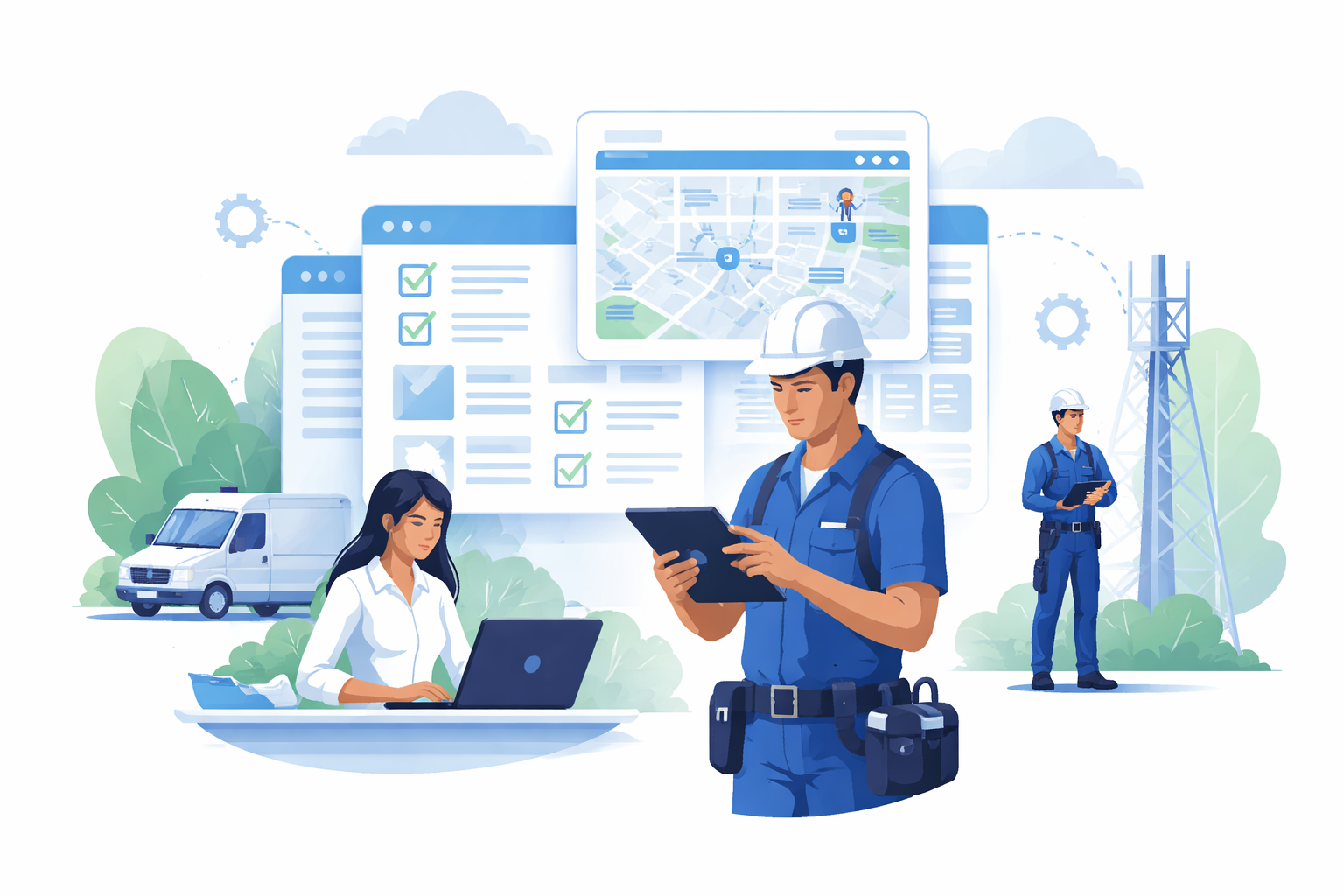
This project focused on modernizing an existing field technician system at Bell Canada by delivering a new, modern, web-based field technician platform, while simultaneously transitioning the delivery team from a traditional waterfall approach to an Agile way of working. The initiative combined product ownership, delivery leadership, and agile enablement within a large, enterprise telecom environment.
Context & Environment
The work took place at Bell Canada during an active organizational push toward Agile delivery. The department mandated a shift away from waterfall methodologies, requiring new tooling, processes, and mindset changes across delivery teams. The platform supported field technicians performing critical operational work, making usability, reliability, and adoption key success factors.
My Role
As a Consultant and Business Systems Analyst at CGI, I was embedded with Bell Canada and acted as a hybrid Product Owner / Delivery Lead. My responsibilities included:
- Owning feature definition, backlog prioritization, and sprint planning
- Acting as the primary liaison between business users and delivery teams
- Enabling Agile practices and coaching the team through the transition
- Removing delivery blockers and improving cross-team alignment
The Challenge
The project faced several challenges:
- Transitioning an active project from waterfall to Agile delivery
- Establishing Agile practices for a team new to Scrum and Kanban
- Ensuring the platform met real-world field technician needs
- Coordinating delivery across multiple teams and dependencies while maintaining momentum
- Beyond delivering new functionality, the project required addressing inefficiencies embedded in existing processes. Many workflows reflected historical system constraints rather than current user needs, creating friction for field technicians and slowing delivery.
Approach & What I Did
To address these challenges, I took a hands-on, structured approach:
- Led the transition from waterfall to Agile by establishing Jira workflows, defining epics, user stories, and acceptance criteria, and coaching the team on Scrum and Kanban practices
- Led sprint planning, backlog refinement, and prioritization to align delivery with business value
- Partnered with field technicians to map end-to-end user journeys and identify pain points caused by legacy processes
- Translated user insights into simplified workflows, removing unnecessary steps and redesigning interactions to better reflect real-world usage
- Prioritized backlog items based on both business value and user impact, ensuring delivery focused on meaningful improvements rather than technology changes alone
- Drove cross-functional alignment across Development, QA, UX, and Solution teams to unblock delivery issues Lorem ipsum dolor sit amet, consectetur adipiscing elit. Maecenas mattis tortor ac sapien mollis, sed varius augue convallis.
Outcome & Impact
The project delivered measurable improvements across delivery and user experience:
- Delivered 15+ features on a modern React-based platform
- Accelerated time-to-delivery by an estimated 25%
- Increased workflow efficiency for field technicians by approximately 30%
- Achieved full adoption across 100+ field technicians
- Reduced rework by ~20% through clearer requirements and acceptance criteria
- Improved sprint velocity and reduced delivery delays by ~30%
In parallel, the Agile transformation enabled the team to adopt a sustainable delivery model that continued beyond the project.
Tools & Methods
- Agile / Scrum / Kanban
- Jira (setup, migration, and workflow design)
- User story mapping and backlog refinement
- Usability testing and field shadowing
- Cross-functional delivery coordination
Key Takeaways
This project highlighted how accumulated technical debt can eventually necessitate modernization—not just to update technology, but to restore delivery velocity and usability. It also reinforced that adopting Agile practices requires active change management, particularly when teams are transitioning from long-standing waterfall ways of working.
Most importantly, the initiative emphasized that modernization should be driven by end-user value rather than technology alone. By closely examining real user journeys, the team was able to simplify workflows, remove inefficient processes, and design a solution that improved day-to-day productivity rather than simply replicating legacy behavior in a new system.